Evaporators
Leading Industrial Evaporation System Manufacturer in India
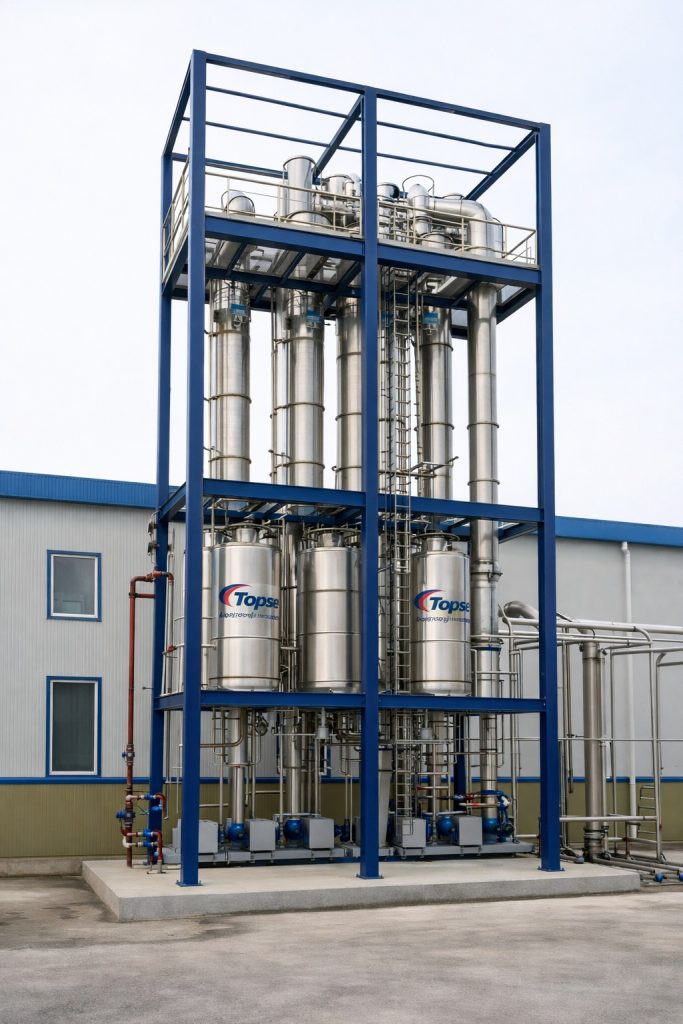
TOPSE has expertise in designing evaporation systems that guarantee high process quality, resource conservation, and the lowest possible operating costs. As one of the foremost Evaporator Manufacturers in India, we focus on building new plants and optimizing existing ones. We align investment cost and operating cost in a balanced concept tailored to your requirements. Evaporation technology is used in processes that require concentration of a stream by removing water or other solvents. It finds extensive application in food, chemical, pharmaceutical, fruit juice, dairy, paper & pulp, and beverage processing.
Evaporation Technology
Falling Film Evaporator (FFE)
Rising Film Evaporator (RFE)
Forced Circulation Evaporator
Multiple Effect Evaporator (MEE)
Short Path Distillation
Agitated Thin Film Evaporator (ATFE)
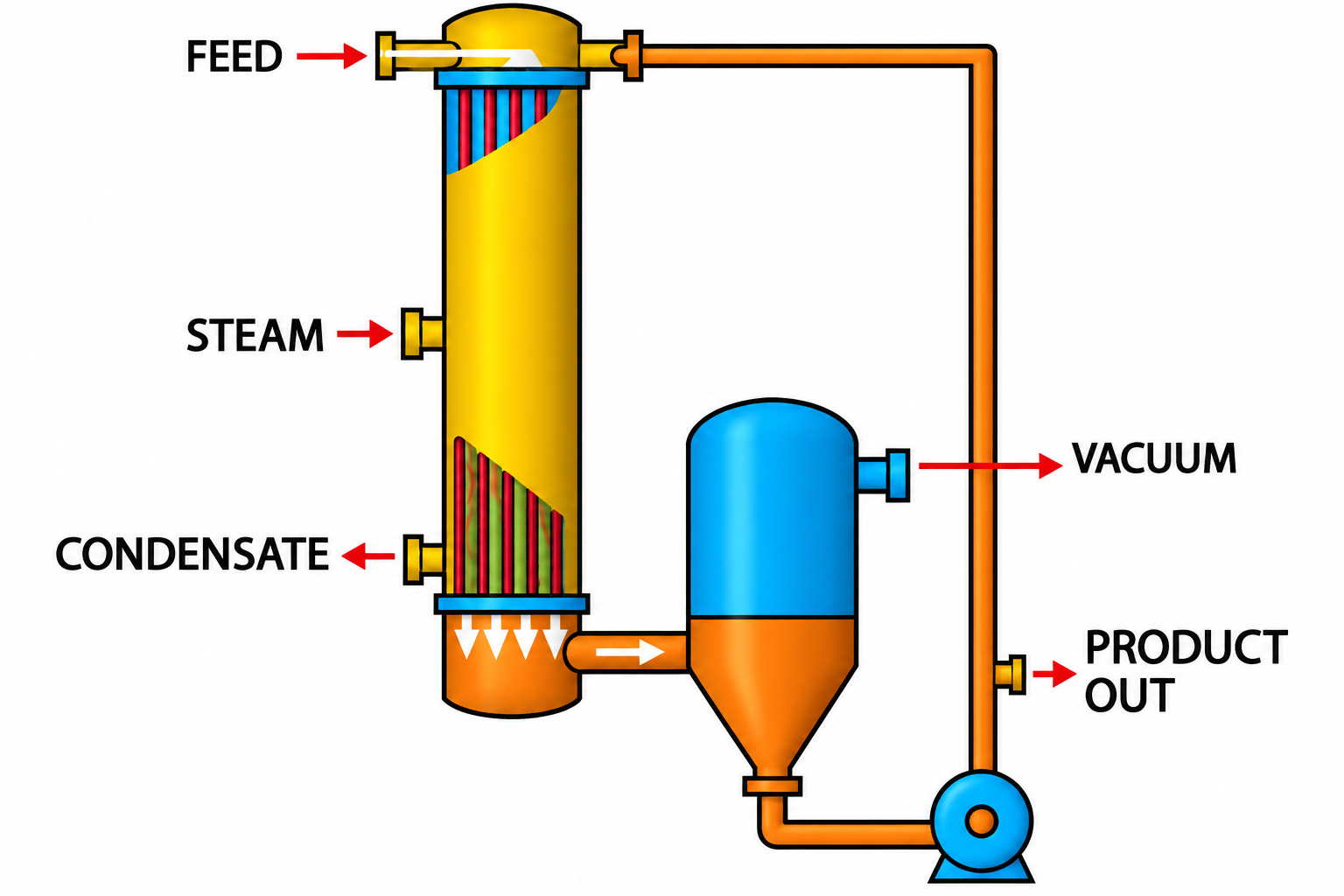
Falling Film Evaporator
- Can operate under reasonable vacuum
- Gentle evaporation with a short residence time in the evaporator
- Suitable for heat sensitive products
- Multiple effect arrangement provides steam economy
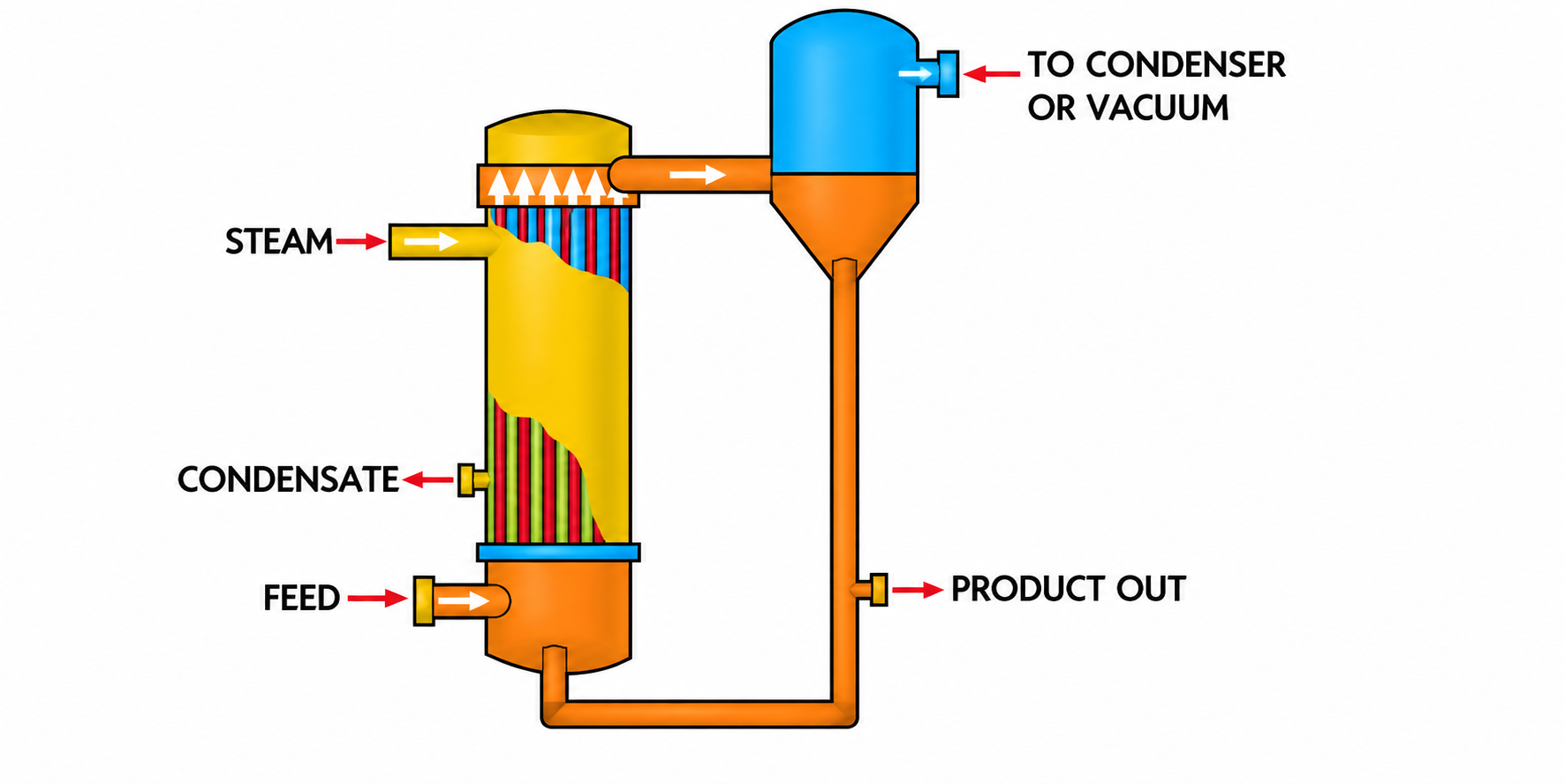
Rising Film Evaporator
- Can operate under reasonable vacuum
- Thermosyphon action eliminates the need of circulation pump.
- Trace quantities of suspended particles in the feed are tolerated.
- Multiple effect arrangement provides steam economy.
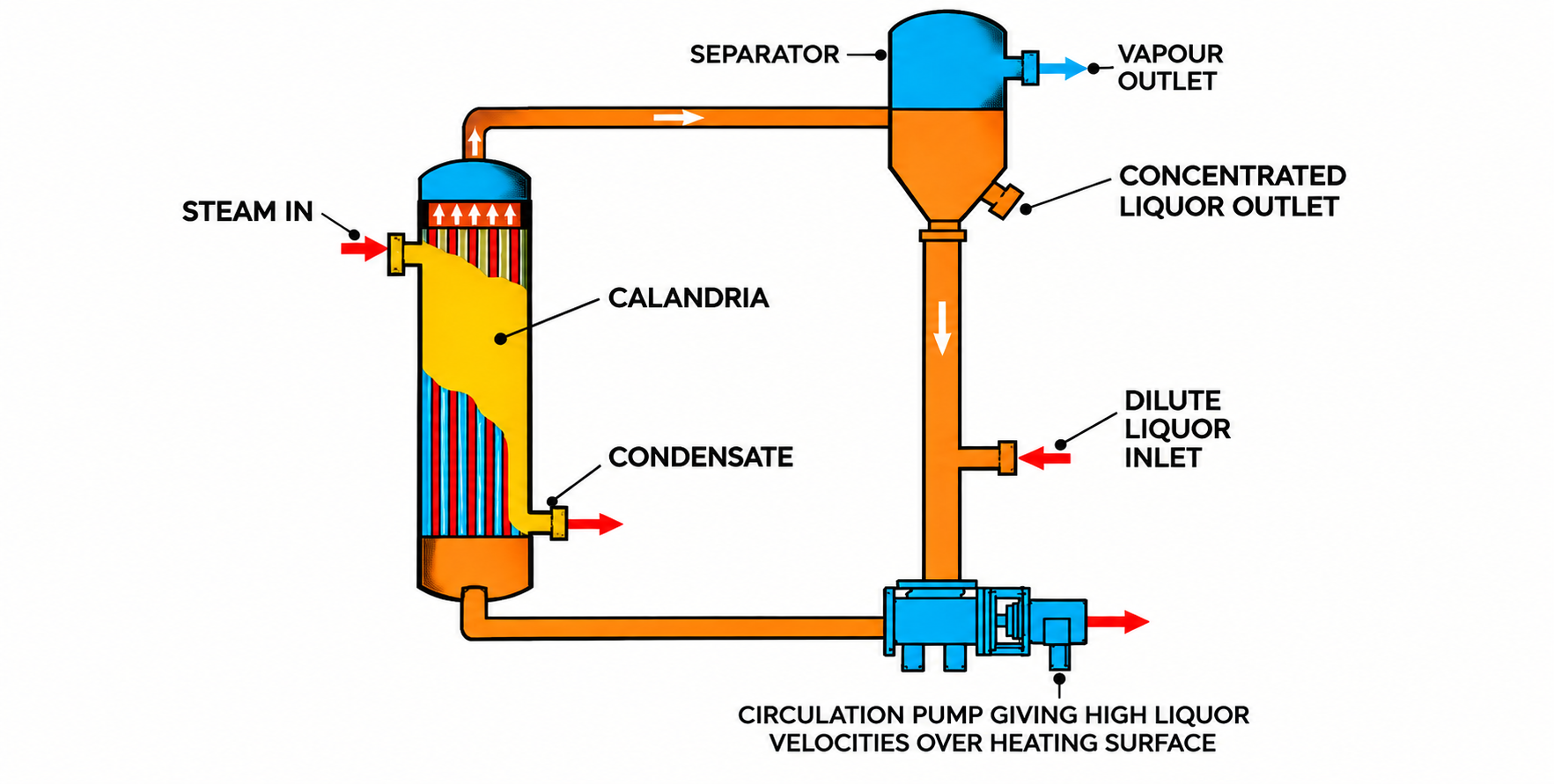
Forced Circulation Evaporator
- Suitable for highly viscous, scaling & salting liquids
- Suitable for wastewater with high suspended solids
- Fouling is minimized due to high liquid velocities & suppressed boiling in the tubes
- High tube side velocities can be achieved.
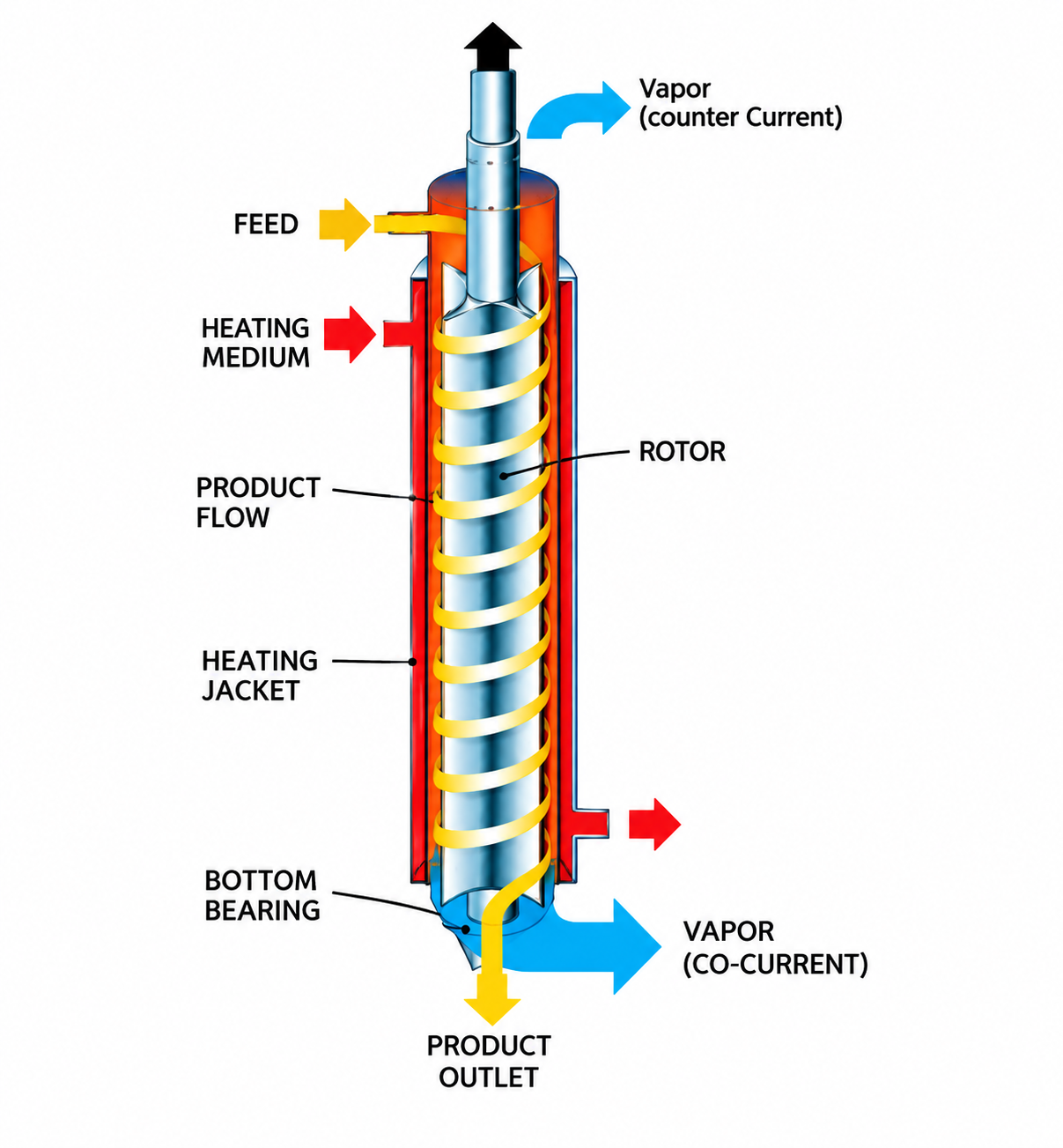
Agitated Thin Film Evaporator
An Agitated Thin Film Dryer / Evaporator (ATFD/ATFE), also known as Thin Film Evaporator (TFE) or Wiped Film Evaporator (WFE). They are mainly used for difficult vaporization and heat exchange processes, especially where products to be handled are highly viscous and conventional plants can no longer meet user demands because heat transfer is insufficient. Due to the liquid film, mechanically generated on the heating surfaces, thin film equipment achieve much better heat transfer rates, even with highly viscous products containing solids.
- Low Residence Time.
- Trace quantities of suspended particles in the feed are tolerated.
- Localised heat transfer coefficient reduction is avoided by giving the intense agitation thus avoiding the scaling.
- Product hold up is low